Tuesday, July 23, 2013

Android/iPhone: Waze App Review

Waze is like a hot girl with a charming personality who likes your favorite band and gets along with all of your friends and family... who also, inexplicably, has a third arm.  This is soooo close to being the next big thing (which might explain why Google shelled almost a billion dollars for it) that it makes you wonder why it has a few glaring errors.

I don't feel the least bit bad about this since cops are already tracking our position.
Waze is an application for Android and iPhone that seeks to replace whatever app you're currently using to map and navigate your life.  It has a great idea which is to add the user ability to add flags to the map, so if you should see a cop sitting in a speed trap you can throw this information up on the Waze map so that other Waze drivers will be aware. I use this example because I'm assuming that's the functionality people will use most, because I'm cynical, but you can also alert your fellow Wazers to other good to know information like construction sites, cars stalled on the side of the road, traffic jams, etc.  This I loved about the app immediately because while, say, Google Maps will alert you to traffic, there is so much more going on while you are driving that would be nice to know before you get blind sided by it.  I was immediately reminded of driving out of state to visit family decades ago and using a CB radio to get just this sort of information.

Turns your phone into this and you can even keep your handle, Toadshark
It builds a sense of community like CB radios did, too.  You can remain anonymous (like a wuss), pick a username (go with Toadshark), or go whole hog with the social thing and link your Facebook app to it (because everyone totally cares what you're doing 24 hours a day).  You can friend your friends and keep tabs on each other like in Foursquare, or use it to keep everyone together while traveling in a convoy.  You can thank people for alerts that they've left on the map (like when you avoid that speeding ticket because they alerted you to a speed trap), and you can clear alerts from the map (like if you find the cop is no longer in the speed trap).  As you drive around you'll see all the other fellow Wazers who are currently on the road. When you get to your destination you can log in to Foursquare if you've linked your accounts. All good stuff.

It's just a question of which way you want to get distracted.
John C. Dvorak believes you will need to pull over to the side of the road to use the social aspect (like flagging and confirming other users flags are still valid).  With the pop-up ads that flash themselves annoyingly while you're trying to figure out if this coming intersection is your intersection to turn, he's not wrong.  When trying to input a destination Waze does ask you if you are the passenger when it senses that the car is in motion because the driver shouldn't be doing that while driving.  It also has a hands free mode so that it will read out alerts audibly before you come to them.  You can also call out alerts to it with speech recognition, but I always have a hard time with these features because theirs usually too much interference for my phone to hear me correctly, which ends up being more of a distraction than just using the phone traditionally.  Even with all thise features, it's still hard to resist reaching for the phone to confirm whether the hazard warning is still applicable or not, or to thank someone for the alert.  We are social creatures and we like our opinions to matter.  This has spilled over to driving. As I see it, on the one hand this app makes you safer because it alerts you to dangers before you have to respond to them, on the other hand it takes some of your attention away from what is right in front of you to accomplish this. So if you're going to use this app, use caution as with anything else.  Yet and still, people will do as people do.

I've read that car manufacturers are working on similar software to be hardwired into cars themselves, so that maybe one day in the future all of our dars will be talking to one another and sharing information, but without necessarily distracting us while doing so.

A choice between 316.9 miles and 2.2 comes down to how hungry you are.
Now for the ugly, ugly problem.  I was so enthused when I first started using this app because it was like Google Maps, but BETTER.  Then I started playing around with the actual navigation.  First problem was looking up local stores.  A search for Walmart turned up Rite Aid, but no Walmart.  A search for Wal Mart did get me the results I was looking for, but is the search algorythm really that sensative? Maybe not, because the Wal Mart search string produced results with the store spelled Walmart, no space.  Why couldn't it find Walmart when I typed it in spelled perfectly to match the search result but then could find it when I spelled it different?  And why did it find the local Rite Aid when searching for Walmart, but when I did a direct search for Rite Aid the closest one it could find was in Colorado? No idea.  Even directly typing in the address you're going to (if you happen to know it) puts you at the mercy of it's fickle search string gods.  It does have multiple services to search through at the bottom of the list, like Foursquare and Yellow Pages, and eventually I was always able to find what I was looking for, but ain't nobody got time for that.

Waze gets it's navigation algorythm from Billy of Family Circus
Secondly, navigation itself.  I haven't been on any long trips of late to test it, but with the results I got from local driving I may never try.  For example, when I leave my house I am 90% of the time driving up the street, because up my street is the city I live in and down the street is a river.  Yes, there's a road there, but that's all there is.  But whenever I ask Waze for directions it always, always, always wants me to go down the street, towards the river.  Once, instead of having me go up the road and hang a left, into downtown, it had me go down the street and take the next three lefts, meaning I had to drive 7/8ths of my block in a big circle instead of just driving the 1/8th that would have brought me to the main road I eventually ended up on anyway.  This does not inspire confidence.

I was all ready to give Google Maps the heave ho and embrace the future of social navigation with Waze, but now I'm not so sure.  I've even avoided recommending it to friends because to me these are not minor problems.  It's so much better, feature wise, than Google Maps, but the one thing it needs to do right (get you where you're going), it doesn't. At least not reliably, not yet.  Maybe Google's acquisition of Waze will lead to an awesome hybrid of the two apps, let's hope.  I'll keep using it because I'm a geek and I love to tinker, and I want this to work. If you're like me, check it out, it has promise.  But if you're an average user and you just want your phone to work, pass. For now Waze is a Swiss Army knife that's missing the knife.


Or the whole hottie with a third arm metaphor.

Sunday, September 04, 2011

What We Learn About Power Lines From Tropical Storm Irene

If nothing else, I'd hope Tropical Storm Irene has pointed out the strategic advantages of putting power lines underground.  You know, instead of waving them in the air for every tree branch, gust of wind, or squirrel with a death wish to take out.


My argument in a nutshell.

I've heard the argument that we can't put power lines underground because then people would electrocute themselves when digging.  I'd like to refute this argument as a reason against using underground power lines by pointing out that:

A) There are already a significant amount of power lines underground (The Age)

B) People get electrocuted by power lines being above ground all the time, as evidenced by all those "You Can't Touch This" PSA commercials.  If you feel any safer having the power lines above ground, read this: Don't Touch This: Myths and Misconceptions


Also not safe.

If the concern is that people will dig into the power lines underground and get electrocuted then simply educating them about this danger should suffice (which we're already doing).  Power lines are dangerous above ground, too, as we've established.  Therefore, when I was a child I got a lot of instruction from my parents and from school about all the dangers of touching power lines.  Generally this is enough, not a lot of kids get killed by power lines each year.  So few, in fact, I couldn't even find any numbers or studies on the subject online, although I did find that an average of 133 workers are killed by power lines per year (www.lanl.gov/safety/electrical/docs/overhead_power_lines_module_4.ppt).  Would putting them underground, where they can't be reached by every fool with ladder or child with a kite, really make them more dangerous?


More dangerous than digging to China.

The argument that we shouldn't bury power lines due to potential loss of life is hypocritical, as well.  Power plants, particularly coal power plants, the source of the power used to power the lines in the first place, kill 13,000 a year with pollution (Huffington Post).  Even with power lines above ground, where they're more likely to come in contact with people, the number of people killed by the lines carrying the electricity is about 1% of the number of people killed by the pollution created to generate the electricity.


Now consider how vulnerable the power grid is being above ground (Reuters).  Tropical Storm Irene was, well... a tropical storm.  Imagine if Irene had been a category 5 hurricane.  What then?  The biggest problem Irene created was 5 million people without power.  That can kill people, too, you know.  It's not just tropical storms that can take power lines down, either.  General wind storms, ice storms, lack of maintenance, and drunk drivers are also adept at taking out power lines.

As far as cost goes, yes it costs more to put the power lines underground.  The Age article sited above goes into some detail about how towns have dealt with that, and while there is a higher initial up-front cost there is also savings down the road.  Like when you don't have to pay to replace all the wires that went down in a tropical storm and the crews working overtime and being bused in from around the country (who then have to be fed and housed) to replace all those cheaper wires.  For a home, while it can cost up to $11,500 to put above ground wires underground, it can also increase the value of the home by 3%, or $15,000 on a $500,000 house.  Pay me now or pay me later, I say.


And how much do you suppose it cost to do this?

Yes, there is an inherent danger to putting power lines underground, as there is an inherent danger in running electricity anywhere, no matter how we do it.  You can hit them with a shovel when digging and they're harder to repair after flooding events, so there is that to consider.  However, being that you already have to call before you dig, would putting more power lines underground really make it any more dangerous than it already is?

Saturday, July 23, 2011

Entertainment: Tron: Legacy


**1/2 - Tron: Legacy should have been a half an hour long. That would have made it a better movie. Also, it looked like it was put together by amateurs. If there's one word I would use to sum up this movie, it's anemic.

THE ANEMIC CHARACTERS:
Sam Flynn is horribly acted by Garrett Hedlund.


His acting is a cheesy as his mustache.

He's one of the reasons this movie feels amateurish. He throws out some snappy one-liners, but he botches the delivery several times. He constantly looks like he wants to look off-camera to the director for his queues. He looks like he's aware that he's acting in a movie and is over-eager to deliver his lines, but he's not quite sure when to deliver them. He's not the only actor that does this, either. It looks... you know, amateurish. Like if you and your friends sat down and tried to make a Tron movie.

Maybe it's not Garrett's fault, though, the writers didn't give him much of a character to build from. When Sam is asked by his father, Kevin Flynn, if he has a job the answer is no, he doesn't. Kevin then asks if he has a girlfriend or wife. No, again. Kevin asks him if Sam went to college. No, he dropped out. Wow. There sure is a lot of depth to bring to that character. What exactly has this guy been up to his whole life? And why is he the main character in a big-budget action movie?

Kevin Flynn is played by Jeff Bridges who reprises his role as The Big Lebowski for this film.


Seriously, it's the same guy.

It's hard for to me to accept this man as some kind of techno-guru with a miracle to bring to the table of mankind when he's talking about "bio-digital jazz, man!" and says other things like "far out!" and "You're messing with my zen thing, man!" Really, they should have just dressed him in a bathrobe, boxers, and a pair of flip flops and called the movie The Big Lebowski: Legacy, This Time it's Digital, Man!


Quorra is well-played by Olivia Wilde and represents the last of a new form of digital life, called the ISO's, that has spontaneously come into existence. They're really wise but really naive creatures, or so Kevin tells us. But when talking about playing the game Othello with Kevin, Quorra says her style of play is more "aggressive" than Kevin's, so I'm not sure where the naivety comes into play. She also doesn't say anything wise, so I'm not sure what that was about either. I say Olivia Wilde plays her well because she does do a good job of looking around wide-eyed like she doesn't know what's going on half the time, so she does convey the sense that Quorra is rather new to the world.

Kevin Flynn is eager to bring this new life form into the real physical world because she will revolutionize everything we know, but he never explains how, and she never does anything spectacular other than some fighting and some gymnastics, so it's hard to be excited about this.

CLU is a program copy of Kevin who turned on Kevin. He is also played by Jeff Bridges, but a digital version. They used the same technology that brought the Na'vi to life in Avatar to create a digital version of Jeff Bridges that looks twenty years younger. I am curious to see how this digital technology advances in the future, although for now it is still a little distracting. CLU's face looks a little numbed in his responses, I guess because of the limitations of digital technology. He looks more like someone wearing a young Jeff Bridges mask that an actual young Jeff Bridges. But it is a good application of this new technology and I hope filmmakers continue exploring it's potential.


"I look exactly like a young Jeff Bridges. So long as I don't move."

Unfortunately since CLU is a copy of Kevin (who is stuck at the maturity level Kevin was when he created CLU) there's not much to learn about his character that we don't already know from the real Kevin from the last movie (before Jeff Bridges was a hippie). CLU's kind of there, he does some stuff, but other than the movie needing a bad guy there isn't much point to CLU.

Tron (Bruce Boxleitner). We're reintroduced to Tron from the original film (again a digital creation of Bruce Boxleitner to what he looked like 20 years ago), the program who "fought for the users". For most of the movie he's a bad guy, though, working with CLU although we're never told why. Later Tron spontaneously turns into a good guy again (he shouts out, "I fight for the user!" suddenly in a scene that made me laugh), but we aren't told why that happened either, so that didn't do much to further the story or the character.

Overall, the problem is that none of these characters has a story arc. Sam kind of grows up and decides to take over his dad's company when he returns to the real world. But that's it. Two hours for someone to decide to do something. Sam doesn't really develop his character, he just decides to start having one. Kevin's different than he was from the last movie, but we don't get to see the change as it's already happened before the movie started. Quorra's Quorra, no real room for change in a character that's supposed to be mankind's salvation. CLU doesn't change either, he really can't as he's a program that's doing exactly what he was already programmed to do. So the movie feels more like hanging out with friends, talking about nothing of consequence, rather than watching a story unfold. Nothing changes.

"What do you guys want to do today?"
"I dunno, what do you want to do?"
"I dunno."
...
"Far out, man!"

THE ANEMIC PLOT:
If you haven't seen the movie already I'm about to "ruin" it for you. I pulled this synopsis off of IMDb: "The son of a virtual world designer (Sam) goes looking for his father (Kevin) and ends up inside the digital world that his father designed. He meets his father's creation (CLU) turned bad and a unique ally (Quorra) who was born inside the digital domain of The Grid." Aaaand, that's about it. Really. That's the whole plot. The son, Sam, finds his father and then heads straight for the exit. That's it. But for some reason it takes a little over two hours to tell that plot.

What makes it worse is that the movie sets this plot up somewhat as a mystery, when there's no mystery to it at all. The story is pretty standard and it doesn't require a lot of thought to figure out. As an example it isn't revealed that Quorra is the last of the ISO's until towards the end of the movie, but if you'd been paying attention (and by paying attention I mean not sleeping) you'd have already known this the second The Big Lebowski.... I mean Kevin explains what the ISO's are.
Oh, the ISO's are unbelievably naive Lebowski says? And he hangs out with this chick who looks perpetually confused by what's going on around her? Gee, I wonder if she's an ISO? Guess I'll have to wait another hour to find out. Fun!

But, I guess in order to have a movie that was longer than half an hour they had to stretch it out, like we're waiting to find something out that we don't already know. But we never do. Which makes it boring. The first time I watched Tron: Legacy I actually did fall asleep. Literally. When I woke up I still knew exactly what was going on in the story. When the plot has no more depth than the synopsis what you're left with is long stretches of the movie where no new information is being fed to you. We're left watching Sam do... stuff, while we're waiting for him to hit the next plot point.

The movie starts out wasting time. There's a brief synopsis of the original Tron, but since this movie stands on it's own pretty well and because everything you would need to know about the original Tron is explained later on this synopsis is really useless. Then it goes into some detail about what's happened to Kevin's company since the last movie but since it's never touched on later on in the film and has no bearing on the plot this is all useless as well. The film then "explores" some father/son issues, but if you're a son who has a father, or know a son who has a father, or know anything about human beings at all, then you already know everything you'd need to know about this relationship. They don't cover anything particular to this father/son relationship. So that's useless. Again. Half an hour into this film and we haven't touched on anything of consequence. My family actually walked in on the movie at about this point and asked what they had missed and I answered, "Nothing. That's Sam, he's looking for his dad."


"So what happened at school today, son? Nothing? Oh, well, that's insightful. Glad we wasted two hours of everyone's lives to establish that relationship."

There is a framework for a good story here. There's a lot of ideas and relationships that could have been explored. But since they aren't explored, at all, it's just an empty shell of a story with gaps big enough for the entire movie to fall through.

The ISO's could have been explored better, but all we really know about them is that they sprang into existence out of thin air and were then brutally murdered out of existence via genocide by CLU. That could have been interesting too if we knew why CLU decided to eradicate them. Especially since CLU was created to design the perfect world, and the ISO's are established as sort of being perfect digital beings, you'd kind of think CLU would have kept the ISO's around and murdered everyone else who was less perfect than the ISO's. But he doesn't and we never find out why. So the ISO's were born without reason and are destroyed without reason. That doesn't give much depth to the story.

CLU himself is a mystery to me when he could have been the best character in the movie. If you've ever seen any Star Trek episode where one of the characters, like Kirk, gets split into two or more versions of themselves (like a Good Kirk and a Bad Kirk) you know that there's a lot of material to be mined here for a story in this scenario.


"I sense a character study coming on."

But the movie doesn't go into any of this. We do find out CLU felt Kevin had abandoned him, which Kevin did as he grew older and matured and CLU couldn't mature with him. But that's about it. How that leads to genocide I don't know. And if CLU was designed to create the perfect system boy is he bad at what he does. Kevin's basic plan to rid the world of CLU is to sit back and do nothing as CLU is sowing seeds of unrest in "the Grid" and is about to be brought down by revolution anyway. Really? That's the perfect system CLU was created to design?

The movie also touches on some issues of created beings rebelling against their god that it doesn't bother to develop either. Basically Kevin is god to the Grid, he made it and everything in it. CLU turning on Kevin should be as dramatic as the Devil turning on God, but it's not. This relationship is never looked into. Kevin has basically abandoned the Grid to it's own devices when he really should have taken some responsibility to heal the wounds between him and his lost creations before the end of the movie. But he doesn't. So that's a wasted story line as well.

The main threat of the movie is CLU's attempt to get out into the real world in the same way Kevin got into this fake world. CLU even develops an army to bring with him into our world. But how that would be a threat is never explained so there's no real drama for us as the audience. How exactly would digital programs exist in the real world, and how would they be a threat to us? CLU's army isn't that big and it looks like any division of the National Guard alone could overpower it. Would CLU have any of the digital powers he has in The Grid once he arrives in the real world? We never find out, and therefore never know what kind of a threat CLU would be to us in the real world, if any at all.

THE ANEMIC CONCLUSION:
What the filmmakers should have done is simply remake the original Tron. Seriously, why not? It's kind of what they did anyway, isn't it?

Separated at birth? You decide.

My reasons for this are as follows:
  1. As far as I can tell the whole point of making Tron: Legacy was to "reboot" the franchise as is the trendy thing to do with movie franchises these days. This is to introduce the brand to a new generation. That would be better accomplished by just remaking the original, especially now that they could make it more along the lines of what the original was meant to be.
  2. They wouldn't have been bogged down with having to explain what's happened since the last movie, since it has been 18 years.
  3. Nothing of consequence happens in Tron: Legacy, so why not just start from the beginning?
  4. They've shown that they can use digital technology to recreate a young Jeff Bridges, along with all the other actors. Why not just remake the entire original Tron this way, with a young Jeff Bridges? It could have been the greatest remake ever.
This underscores other odd decisions the filmmakers made. For one, the sets they chose to use. The original Tron had a lot less computer imagery than you would think. A lot less. In 1982 there was no way to composite live action footage with computer animation, so every shot that has a person in it contains no computer animation. What you think is live action actors interacting with a digital universe is just clever set design, lighting, and traditional special effects.

Now that you can film live actors with a digital background, the way Tron was originally meant to look, they don't. Like the original they use sets dressed up to look like digital backgrounds, and do a worse job. This makes no sense to me. All three Star Wars prequels extensively used computer animated sets for the actors to play in. With Tron: Legacy being a movie that is supposed to take place inside a computer, you'd think they would use a computer to create the sets.

Because they don't, the original Tron was much more successful at convincing the audience that they were watching a drama unfold inside a computer. Tron: Legacy looks more like a European techno dance club vomited all over the real world.


Inside a computer.

European techno dance club vomit.

The same goes for the costumes.


Looks like circuit boards come to life.


Looks like a questionable fashion statement.
Because they now have the technology to make suits that actually light up, instead of just making them look like they were lit up like the original Tron, they decided to do it this way when it accomplishes nothing for the audience except making the suits look watered down from the original. Now the suits don't look like walking circuitry, they look like... I don't know. The worst is Kevin's light up hoody. This does nothing to make it look like he's a person in a computer, it looks more like "Hey! Look what we can do!"


There's the bathrobe. Now it's officially "Lebowski: Legacy". Get him a White Russian.

Bottom line is that with all it's limitations the original Tron was more successful convincing us that we were inside a computer.

Maybe this is because the filmmakers don't seem to understand computers period. I got this sense right from the beginning. The rich guys who run Kevin's company in his absence talk about how their new operating system is so secure it cannot be copied, which makes no sense if you plan on selling this software, since you're selling copies. The way real companies, like Microsoft, lock down their software is by limiting how you can register the software, not copy it. Every computer that runs Windows has a copy of it, so selling an operating system that cannot be copied is like trying to bite you're own teeth. You can't do it. You can't distribute software without distributing it.

The movie tries to make some hippie points about how information should be free and companies trying to make a profit for investing time, work, and resources into a useful product are evil. But they didn't release the movie for free, so as far as I'm concerned that's a bunch of malarkey.

Also, when Sam breaks into his dad's old office, which no one has been in since 1989, the computer Sam finds, and has to wipe 18 years of dust off of, looks exactly like the computers everyone else is using in the movie in 2010. Shouldn't it look like a 1989 computer?


I must have been more deprived as a child than I thought. That's not what my Commodore 64 looked like, at all!

Lastly, we're told that, like in the original, the discs the digital people wear on their backs in The Grid is their data disc. This is key because Kevin remains in hiding because he doesn't want CLU to get his disc and therefore his knowledge which CLU could use for evil. Why doesn't Kevin just leave the disc at home when he goes out? It's kind of explained that people on The Grid can't survive without their disc, which makes sense, but in the middle of the movie Kevin does have his disc stolen from him yet he doesn't die. In fact, nothing bad happens to Kevin at all even though it takes the second half of the movie to get the disc back. So if he could last that long without the disc why didn't he just leave it at home?

It feels like the filmmakers tried to make the movie deep and profound but just didn't have the goods to actually do it. It's like a kid trying to tell a story when they don't know what they're talking about. They tell you a character is really cool but if you ask them what makes that character cool they can't give you an answer other than something like, "Well... he's just like really cool."


"Seriously, guys! Tron: Legacy will be even cooler than a Truffle Shuffle!"

The profound truth Kevin tries to teach CLU at the end is, "The thing about perfection is that it's unknowable. It's impossible, but it's also right in front of us all the time." Huh? I don't even know what that means. It sounds like either A) the statement is so profound it went over my head or B) this is supposed to sound deep but doesn't make any sense. I'm going to guess it was B.

This movie should appeal people who like eye-candy and who want to feel like they've watched something deep and profound but without having to actually think about anything.


Tron: Legacy really is cool.

Sunday, March 27, 2011

You're An Idiot

From cracked.com. I realized this a few years ago myself, and it absolutely true. We're all idiots, always will be, and here's why:

Here's what's going to happen. At one point, you will honestly believe that you have every single thing figured out. You reach an epiphany where you understand yourself, you know what you want to do with your life, you know what kind of woman or man you're looking for, and you've figured everyone else out, you're a good judge of character. Exactly two years later, you'll say "Man, I was an idiot two years ago when I thought I had life figured out, but now I've REALLY got it figured out." You'll calm down a little bit and look back on your youthful ignorance and laugh. "How could I think life was all about [X] when it's CLEARLY all about [Y]? So young."

Two years later, you'll do the exact same thing- scrapping all of your old, childish assumptions in favor of your current, brilliant assumptions. In fact, you'll repeat that process every two years. Life, from what I've gathered so far, is largely about looking back on your past self and realizing how stupid you were. And you'll keep convincing yourself that, even though you were clueless two years ago, now you've got it figured out, until you finally reach a tipping point, and then you'll say "Man, I was an idiot two years ago, and two years before that, and two before that, so- you know what? Even if I think I have things figured out, I'm probably an idiot right now."

Thursday, February 17, 2011

Opening Up

So I've decided to reopen this blog. Or at least start posting to it again. At least for awhile. Got some stuff I'd like to write that's a little too long for Facebook. Nice to see how far social networking sites have come, though. There was no Facebook back when I started this blog and we used to have to do all this by hand.

Look around at stuff I wrote here over four years ago, it's amazing how much as changed since then. How much I was right about, how much I was wrong about. Marvel at how it used to make sense to write a whole article on how GPS works on a phone, back in 2007, when it was still a jaw-dropper. It's like four years ago we were living in the stone-age or something.

Friday, September 14, 2007

Closing Down

I will not be posting to this blog anymore, though I will be leaving it up indefinately. I no longer have the time nor the inclination for it. I am still posting to my Vox blog, hope to see you there.

Thursday, April 26, 2007

GPS a Life Saver for the Navigationally Impaired


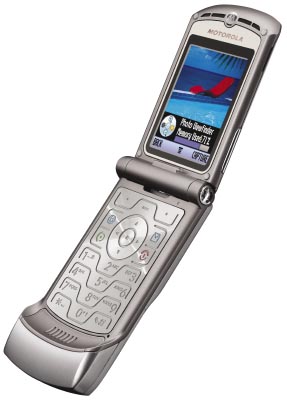
While traveling this past weekend I found the Verizon VZ Navigator GPS system on my Razr phone came in quite handy (thanks Dad!). Simple to use, I downloaded for about $3 a day, but you can use it all the time for about $10 a month. It was able to navigate me through Boston, something I've never been able to do on my own, so I imagine it would be useful just about anywhere.

Using it was simple, I just typed in where I needed to go and it pretty much took care of the rest. It loads maps for you as needed and gives you verbal commands as you approach your turns. One thing I really appreciated is that most time when it tells you the next turn to take it also tells you to prepare to turn left or right at the next turn. When coming down an off-ramp from the highway this is particularly useful as many times you have to pick a lane before you get to the end of the ramp. The maps are also useful, especially when you think maybe the Navigator has gotten confused, you can zoom out the map and see it does really know where it's going. I thought for sure it was leading me astray out of Boston, but it was right. Hence my need for just such a program in the first place!

Another nice thing is that if you do take a wrong turn because you didn't understand it's instructions it doesn't have you turn around or anything, it just recalculates the quickest route from where you are. It's seamless enough that if you're not paying attention you might not even noticed you took a wrong turn at all. The GPS is also sensitive enough that when I asked for directions to get home from my job, while I was still in the building, the first thing it told me I had to do was to get on a road.

Of course no system is perfect. While driving underground in Boston it stopped working because the phone couldn't get a signal. And it can be a drain on the battery. The Navigator still works quite well with the Razr closed, however, which helps.

Wednesday, November 01, 2006

Tech: Microsoft Gets It's Groove Back With IE7


Internet Explorer 7 - Maybe Microsoft never really had a groove, but lately it's been making some serious efforts at getting one. It started with the X-Box, then the X-Box 360, and soon the Zune will hit the market; Microsoft is slowly re-inventing itself into something it never was before... cool.

In the interests of "fair disclosure" I am a devout Firefox user (note the Firefox link on the side panel), but after playing with the new Internet Explorer 7 for a week I'm impressed. I'm not going to stop using Firefox, but Microsoft has closed much of the gap between the two web-surfing solutions.

If you visit the Explorer home page (link above) you'll immediately see in big letters "we heard you", and that's exactly the feeling I got when I started using IE7. It is easier to use and it seems to be more secure, though only time and people a lot smarter than me will be able to determine if it really is more secure. The first improvement, which fixed what had always been my biggest complaint about IE, is tabbed browsing. Now you don't have to open a new IE window every time you want to look at more than one page at a time. Every other browser has this, so it's time IE caught up. To it's credit Microsoft has actually done slightly more than catch up in this department, however, it's made some slight improvements. For example, adding more tabs to the tab bar is as simple as clicking on a little mini-tab that always resides to the right of the furthest right tab. In Firefox you have to add a button to your menu bar, so score a point for Microsoft on ease of use (as much as it pains me to say that). The other improvement over Firefox is that if you middle click on a link it open the page in a new tab (as Firefox does) but the new tab is directly next to the tab you're currently using. Firefox always opens new tabs at the end of the tab bar, and while you can move tab locations around in both programs, IE7 is (sit down for this) a lot easier. To the left of your tab bar is a nice button that will pop up a page showing you screen shots of all the tabs you have open, so if you're like me and you get lost in your tabs it's easy to find the tab you're looking for. You can even close tabs from this display mode. It's easy and intuitive.

Most noticeably is the lack of pull down menus when you first launch IE7. You can add the menu bar if you so choose, but I found I didn't really need it, you can get pretty much every thing done using the icon toolbars. To the left of your tab bar are your favorites, represented by little star buttons. Managing your links is easy and simple. But if that doesn't work for you and you have a del.icio.us account you wish to access you can add a del.icio.us toolbar, which brings me to the next great thing about IE7, it's customizable.

I always liked the ease with which I can personalize my Firefox browser and while IE7 isn't quite there yet it's come a loooooooong way from IE6. Under the tools menu you can manage "add-on's", much like you can in Firefox, and I found it painless to add my treasured del.icio.us and RoboForm toolbars to IE, something I hadn't been able to do before. IE7 still doesn't have the vast number of add-on's that Firefox has, but I imagine that will come in time. The del.icio.us add-on isn't as good as some of the ones for Firefox either, but again, being that Microsoft is allowing third parties to write add-on's for IE7 I can only assume it will be a matter of time before IE catches up.

So far IE7 has functioned with few problems for me. At first I was having trouble playing YouTube videos and I was scared for IE (no browser will last long without that functionability), but within a day the problem seemed to go away. Don't know why, maybe it was patched, maybe I did something wrong, but it works fine now. I've had to install a couple of plug-in's which is no surprise other than that I had to install the Windows Media Player plug-in, I thought they would have had that together. I've spent a whole week doing my usual surfing and not run into any real problems. Microsoft is right, it is easy to use, and any troubles I had were short lived and fairly simple to figure out.

I'm not a security expert but this IE seems to be much more on the ball on such issues. There are little pop-ups to warn you of potentially malicious software trying to install from web pages, and even Microsofts own scripts won't run unless you give them express permission. This is a change for Microsoft who once shipped XP with a built in firewall but without having that firewall on unless you turned it on yourself. Microsoft seems to now realize you have to expect people don't know as much about security as we should (because for the most part we don't) and play the role of a guiding parent.

On the down side, unless I'm missing it IE still doesn't handle downloads half as well as Firefox does. Cosmetically the only thing I've noticed wrong is a little rebellious graphic in the tab bar, at the base of the tabs, that doesn't seem to want to line up with the rest of the graphics. Otherwise it's a good looking program, not at all utilitarian like a lot of Microsoft products. It's cool looking, or at least close to it.

Overall big thumbs up to Microsoft. I'll go back to using Firefox because I don't see anything about IE7 that will make me want to jump ship, but on the other hand if I had been an IE user all along I would certainly have much less reason to leave IE for Firefox now. The gap isn't entirely closed between the two yet, but IE7 marks a giant leap for the IE brand. I no longer cringe if I have to use IE (say, to get Microsoft updates). Firefox isn't running circles around IE anymore, IE is a close second now, which is great news for IE users. In a sense it's also good news for Firefox users because competition is a good thing. If you're already using IE6 don't hesitate to get 7, you'll never look back.

Saturday, October 21, 2006

Sports: Remembering Happier Days for the Mets


I was disappointed when the Mets didn't make the World Series this year. I had them picked to play the Yankees in another subway series, shows how much I know about baseball. With injuries to the Mets pitching staff, though, the Cardinals, who I had picked last make it all the way to the Fall Classic.

In any event, I was waiting for this clip to hit YouTube, when things were looking up for the Mets. A single with men on first and second for the Dodgers should have spelled trouble for the Mets, but instead it turned into the greatest, and dumbest, double play in playoff history. I watched this live and could not believe my eyes. Thanks to DVR I got to not believe my eyes the second and third time either.

Friday, October 06, 2006

Entertainment: Fearless


***1/2 - Fearless stars Jet Li as Huo Yuan Jia in this movie based on a true story from turn of the century China. As China is being ruled and influenced by outsiders, Huo battles in the arena against the best fighters of their occupiers for Chinese pride. At least that's the story suggested by the commercials, and while that is a great part of the story there is much more to this film.

What this movie is really about has nothing to do with national pride but rather personal salvation and how mastering oneself is a greater and harder task than mastering others. We are first introduced to Huo as a child who has great affection for his father but doesn't understand him. Huo watches as his father is beaten in the arena by a rival and swears to never be defeated in his own life. I didn't fully understand Huo's motivation, as his fathers defeat wasn't particularly embarrassing and no one in his house encouraged Huo's lust for revenge, but I guess Huo was just one of those kids with a little bit too much drive in him for his own good. Even after Huo grows and accomplishes his quest, even beating the son of his fathers rival, it is not enough for him.

Huo indulges himself a little too much, his "students" are nothing but drinking buddies who eventually lead him into trouble; financial, spiritual, even his family is not spared. No one can defeat Huo, but it is those around him who are made to pay for his arrogance. This is not just a martial arts film, it is also a compelling and emotional story and I felt Huo's losses, he suffers a great deal and the director never shies away from his anguish. This is essential because it fuels the second half of Fearless, the redemption of Huo.

While Huo does come back from a self-imposed exile and fight foriegn nationals, he does so more with contrition than with pride. He admits to being a bad father and a bad son, but he also has an inner calm that only seems to come to those who have seen and dealt with their own inner evils. He doesn't fight for personal glory, he is fighting to redeem his lost family and himself.

I didn't find this movie to be particularly deep, but there are some philosophies on fighting that Huo shares which help develop him as a character. He has an interesting conversation with a Japanese fighter before a match about different kinds of tea and why Huo doesn't judge them. He feels that people who judge and rate the quality of tea say more about themselves than they do the tea. Everyone has different tastes, and it's the perception that changes, not the tea. It is the same with martial arts, he doesn't feel one school of art is better than another, only that some practitioners are better than others, and the better ones are the those who are winning the struggle within. The arts merely give you tools with which to conquer the conflict within oneself.

I probably would have liked the film more if there had been a little more subtlety. Even in the fight scenes, which are well done, the use of slow motion photography and special effects are a little detracting. Whenever these two techniques are used it always seems to take something away from the reality of the fight. I think what the human body is capable of is amazing and entertaining enough on their own without needing embellishment. Having said that this film is beautifully filmed and is a pleasure to watch. Whether Huo is engaged in battle or working a rice patty every frame is well thought out and full of color and life.

Even if you're not interested in martial arts films, there is much more here for you to enjoy. The film is well rounded, the story is one worth telling, and the relationships depicted are real and carry emotional weight. While not great, I think this movie could appeal to just about anyone.

Wednesday, October 04, 2006

Society: Why DRM is Stinky


Defective By Design - This is a great ad, I hope lots of people see it. This is why I'm so against DRM (Digital Rights Management). It used to be when you bought a copy of something, you owned it. You could do whatever you wanted with it, other than make copies for other people. You were even allowed to show it to other people, just so long as you retained ownership of your copy. Even then, you could resell it to someone else. Not any more, if the companies using DRM have their way. They don't even want you owning it within your own library for too long, they'd rather you have to liscence it to keep listening to it year after year.

Sigh. I could go on, but... The good news is DRM is fairly easy to defeat for the geeks out there. Every piece of DRM that has been written has either been broken or will be, it's the nature of the software. You can't give someone the lock and the key to play the music or movie with, no matter how well you disguise the key, before someone figures out how to make copies of the key.

Tuesday, October 03, 2006

Entertainment: Superman Returns


***1/2 - After disappearing for five years (more like nineteen years in real life) Superman returns to the big screen in this sometimes clunky, often poorly thought out, yet nonetheless effective as a whole film from director Bryan Singer.

As a whole I enjoyed this picture, so I’ll start with the things that didn’t work first so I can end with what I liked. The details of the story often don’t work or are just plain stupid. There’s an opening scene where we see how Lex Luther, played by Kevin Spacey, made his initial fortune, basically through an inheritance, which has nothing whatsoever to do with the rest of the plot. It’s not even an interesting or original approach to obtaining money so it’s not necessary. We then see Superman’s return to Earth and find that his reason for the abscence makes no sense. He left to find Krypton which we know to have been destroyed, because astronamers thought they had located it. Again, this doesn’t add anything to the overall plot and does nothing for the movie other than add another ten minutes.

Then there's Luthor's diabolical plot... err... on second thought, just Luthor's plot, there's nothing really diabolical about it. Luthor reasons that the only thing that's ever truly been worth money is land, and since all habitibal land is now habitated, he sets out to make new land made of Kryptonite, basically by pushing the existing United States out of the way. Why he wouldn't just take the pre-existing land by some genious plot is a mystery. Especially once we see the Kryptonite island (remember, we've always seen it as a crystal), it's hard to imagine that kind of land having any real-estate value at all. It's hideous.

Then there are a couple of creepy or wierd aspects to this Superman. He's not quite the alter boy he was in previous films. He spies into Louis' house on one occasion, listening in on her conversations. He's also apparently fathered an illegitamite son with her, as we learn towards the latter half of the film, though you can figure it out pretty quickly. I know I've given something away, but that's because it really doesn't matter to the plot, and that was my problem with that plot point and Superman's blatent violations of peoples right to privacy. Had they served a greater purpose to the story I could accept them, but they don't.

Kate Bosworth's portrayal of Louis Lane is forgettable. To be honest I never really liked the Louis Lane character, but Bosworth made it even worse for me. Louis was always a driven, independant, woman, but in this portrayal she is just completely unlikable. She's not independant with charm, she's femenine elitist, icy cold, and it's hard to imagine what Superman would possible see in her, she's so uninviting. Not to mention Bosworth is too young for the role, it doesn't sync with the earlier movies.

Brandon Routh, on the other hand, is perfect as Superman. He doesn't bring anything new to the character, but his Christopher Reeve impersonation is spot on, sometimes eerily so. Having said that, the one thing Routh does lack is the chops to pull off Clark Kent's goofiness half as well as Reeve had done with the role. But Routh looks and acts the part, and it's easy to accept him as Superman.

What I did like about Superman Returns is that it did one thing done of it's four predecessors did, which was make me care about Superman, as a person. As a kid I wanted to be Superman, but I never cared about him as a character. This newfound appreciation is thanks in large part to the analogy of Superman as a Christ figure which comes up several times. Superman was sent, after all, and as we are reminded by several clips of his father speaking to him from the original Superman (Marlon Brando's voice), by his father to save mankind. I had really missed this point of view in my earlier viewings of Superman. I never really understood what Superman's motivation was before, I guess I just thought of him as being a swell guy, which is kind of boring, but Superman Returns hammers home the point the Superman is here on a mission. It also never lets us forget, thankfully, that he is not one of us. There is a scene in which Superman, frustrated with his relationship with Louis, flys high above the Earth and begins listening to the millions of voices below, looking for those who need his help, and you get the real sense of who Superman is, a father looking over his children.

This caring for humanity is displayed in one other fascit that caught my attention. At no point in this film, that I can recall, does Superman ever do an aggressive thing. In other films Superman has always been tempered, but particularly after he had lost his powers and then regained them in one of the movies, I can't recall which one now, there was a sense of revenge in his tone as he settled a few scores, mainly for comedic effect. None of that here. Superman doesn't even hurt people to stop them from whatever evil it is that they're doing. Mostly he only uses his powers to undo or prevent the evil workings of man. Even when battling Luthor, Superman mainly focuses on reversing what Luthor has done. There is a scene in which Superman is shot in the eye, and after watching the bullet fall harmlessly to the ground we might expect Superman to clobber the guy, or incompasitate him in some, but he merely smiles at the criminal, and the scene ends. This is effective. It highlights Superman's mission, to protect mankind and show them a better way. It also makes him appear to be tougher and stronger that even the special effects can make him look. This is a man so powerful he doesn't need to be violent.

At the end of the film I thought they took the Christ analogy a little too far, though, as Superman nearly sacrifices his life to save humanity. The part I thought was over the top was a shot of Superman falling back to Earth, unconsious, with his arms spread to each side like Christ on the cross. I don't mind analogies, I don't need to be hit over the head with them either. Even so, the shots of his lifeless body falling from outer space all the way down to the ground of Metropolis, to the people he has saved, is well done and effective. I realized Superman's love for mankind is paternal, he is willing to sacrifice himself for people, many of whom will never appreciate it, because knows there is good in them waiting to be saved.

Society: Internet Reveals People in Their Natural Habitat Are Wierd


Ever make those audio tapes as a kid like you were doing a radio show? Ever wonder what would happen if they actually got played on the radio? I guess that's kind of what YouTube is.

Sunday, October 01, 2006

Entertainment: Stupid People, Alcohol, and Fire


YouTube - Okay, part of me just wanted to see what it would be like to embed a YouTube file. So there, now I've done it. But this is awfully funny, to me at least. Can you imagine a worse combination, drinking and being on fire? I particularly like the kid's screaming dance while is leg is burning. That'll help. I've seen other videos where the flaming drink trick goes wrong, and you'd think people would realize that playing with fire is dangerous enough, let alone while you're intoxicated.

Saturday, September 30, 2006

Tech: The Future of Interface

TED (Technology Entertainment & Design) - There is a video from one of their conferences I recommend watching. You can download the zip file here. I'm not sure how long ago it was shot, but it demonstrates some new technology in multiple point touch screens. The use of the interface seems to be very intuitive and smooth. The cool factor aside, I think this sort of technology will have a lot of great real world application. Just the thought of having your keyboard be part of the screen, and have it scalable to whatever size or shape you want, is wonderful.

The speaker references how seemless it is and how there's no visible interface, giving you more screen to look at what it is you are actually doing. This made me think of two video games I've played, Homeworld and Black & White. Both games did a great job of using the motions you could draw with your cursor as a means of executing commands that they were able to remove all buttons or side bars from the screen. This gave you the whole screen to look at the world the games were creating, instead of having half that real estate taken up with interface. It made for a much more enjoyable gaming experience.

Friday, September 29, 2006

Society: Think Before You Speak... Or Whatever it is She's Doing


Watch this short video - I think a video like this might hurt her dating life for awhile. I mean, how does this help her cause? I'm guessing she's in the pro-choice camp, but it really doesn't matter. Whatever side she's on probably wishes she wasn't. The kid she's yelling at, to his credit, seems to understand the concept of not arguing with idiots. See how smart he looks by comparison, just not saying anything?

read more digg story

Thursday, September 21, 2006

Tech: Two New Windows Flaws, You're At Risk Even if You're Fully Updated


TWIT - I haven't had time to listen to the whole podcast as I'm on my way to work, but just heard of two new Windows flaws (one in Internet Explorer and one in Windows 2000) that will effect you whether you're updated or not.

Click here to see security guru Steve Gibson's work around for both problems until Microsoft can fix them.

Monday, August 14, 2006

Entertainment: An Inconvenient Truth


**** - This is one of the few must see movies that are truly must see. Not must see in the sense that it's terrifically entertaining (although in many ways it is), but in the sense that you must see it like you must see the car coming down the street before you cross it. It's imperitive.

In An Inconvenient Truth we discover a much more human Al Gore than we saw back in 2000, not at all a stiff as a board stuffed shirt. Gore is engaging, passionate, and surprisingly funny. He is on a quest, a quest to wake the world up to the growing problem of global warming, and by the end of the film it's hard not to understand his drive to get the message out. Near the end of the film Gore spells out exactly why this movie works. He's spent the last several years giving this lecture, watching his audiences and cataloging the reasons people resist or marginalize the thought of global warming. He then finds ways to get around this opposition, and he's gotten very good at it. I myself believed in global warming, but I had doubts about how much we were or were not causing it. Maybe this was cyclical (before we humans ever set foot on this planet the normal weather swings gave us New York under glaciers at one extreme to 70 degree weather in Antartica), maybe we had little effect, maybe we had more effect than we thought. I wasn't sure of the context, and I didn't think scientists were either. But with compelling evidence that Gore presents with the grace of that school teacher you knew who could teach anything to anyone, there is a context, and it's a frightening one.

Mostly this movie is a Power Point presentation, albiet one on steriods. It's not nearly as boring as it sounds, it's engaging. Maybe Gore thought we would be bored with the lecture he's given nearly a thousand times because intercut throughout the movie are documentary style clips of Gore preparing his lesson and a history as to how he came to know his subject so intimately. He gives us some life stories, how his son was nearly killed when younger, how his sister died of lung cancer, his failed bid for presidency, which aren't really necessary but do give a richness to the story he is trying to tell. Gore is also surprisingly good at the voice over narrations he does during these parts.

This is an important movie that should be viewed by as many people as possible. There is a lot of evidence for global warming that is presented here that is not yet being disseminated by the mainstream media. Gore's dissertation is well thought out and thorough. He does not come off as preachy or aloof, he is earnest and even contrite for not having done more sooner. From shocking pictures of glacier melting already well in progress to statistical analysis (consider that carbon dioxide levels are already twice as high as they've been in the last several thousand years) Gore builds an undeniably compelling case.

This movie should appeal to anyone.